Gas Line Repair Oklahoma City, OK Licensed, Safe & Code-Compliant Service
Gas Line Repair Oklahoma City, OK Licensed service is essential when dealing with any gas-related issue in your home or business. If you smell gas in your home, leave immediately, don’t touch any switches, and call 911 from outside, then contact our licensed Oklahoma City gas line plumbers to locate the leak, make the repair, and restore your service safely and to code.
Natural gas powers a significant portion of daily life in Oklahoma City, furnaces, water heaters, stoves, dryers, fireplaces, and outdoor appliances all depend on a gas line system that works exactly as it should, every single time. When that system develops a problem, whether it’s a slow leak from a corroded fitting, a pressure drop affecting appliance performance, or a line that needs to be extended for a kitchen remodel, choosing a licensed gas line repair service in Oklahoma City, OK is critical. Gas line repair is not a gray area. It is not a job for a handyman, a general contractor, or a determined DIYer. Done incorrectly, the consequences range from an appliance that won’t function to a leak that fills a home with an invisible, odorless hazard.
Our licensed plumbers provide gas line repair in Oklahoma City OK for residential and commercial properties throughout the metro area, from emergency leak repairs to new gas line installation, appliance connections, and full system replacement, all delivered with a focus on safety, compliance, and professional licensed standards.
What Makes Oklahoma City Gas Lines Particularly Vulnerable
Every city has its own plumbing challenges, and OKC’s combination of aging housing stock, soil conditions, and weather patterns creates a specific set of pressures on residential gas line systems that homeowners in newer or more geologically stable markets simply don’t deal with.
Aging Pipe Infrastructure in Older Neighborhoods
Oklahoma City has a substantial number of homes built before 1980, many concentrated in historic and established neighborhoods like Gatewood, Mesta Park, Heritage Hills, Crown Heights, and Capitol Hill. Gas lines in these homes are often 40 to 60 years old — many still running on original black iron pipe with threaded fittings that have been subjected to decades of Oklahoma weather, soil movement, and temperature cycling.
Black iron pipe, while durable, is not immune to corrosion — particularly at threaded joints and connections, which are the most common points of failure in aging systems. As pipe material degrades, fittings loosen, seals weaken, and slow gas migration begins at those connection points. This type of deterioration is invisible and odorless until enough gas has accumulated to trigger the mercaptan additive’s distinctive rotten egg smell. By that point, the situation is already urgent.
Oklahoma's Clay Soil and Ground Movement
The same expansive red clay soil that causes problems for sewer lines and water pipes doesn’t spare underground gas lines. Buried gas piping runs from the meter at the exterior of your home through the ground and into the structure. As OKC’s clay soil swells during wet periods and contracts during dry ones, that movement puts stress on buried pipe, joints, and the points where underground lines transition into the structure. Over years, this can cause underground gas pipes to shift, crack at fittings, or separate from connections that weren’t originally designed for constant ground movement.
Oklahoma's Temperature Extremes
Oklahoma City sees some of the most dramatic temperature swings in the country. A February ice storm can drop temperatures to single digits within hours of a mild afternoon. Those rapid freeze-thaw cycles stress pipe materials, particularly outdoor gas line connections, flexible appliance connectors, and any sections of piping that transition between interior and exterior environments. Old or brittle connections that would hold in more temperate climates can fail under OKC’s temperature volatility.
The 811 "Call Before You Dig" Issue
Oklahoma City residents who hire landscapers, fence installers, irrigation contractors, or other outdoor service provider, and those contractors don’t call 811 to have underground utilities marked before digging, risk striking buried gas lines. Underground gas line damage from accidental excavation is one of the most common causes of emergency gas line repair calls we receive. If you’re planning any outdoor work that involves ground penetration, make sure 811 has been called first. It’s free, it’s required by law in Oklahoma, and it prevents a situation that no homeowner wants to deal with.
Warning Signs You Have a Hidden Water Leak
The Smell of Rotten Eggs or Sulfur
Natural gas itself is odorless. Oklahoma Natural Gas and other providers add mercaptan — a harmless chemical compound with a distinctive sulfur or rotten egg smell — specifically so leaks can be detected by smell before they reach dangerous concentrations. If you smell this odor in your home, near your meter, or in your yard near a buried line, treat it as an emergency. Leave the home, don't operate any switches or appliances, and call 911 from outside. Do not re-enter until emergency responders have cleared the home and a licensed plumber has repaired the leak.
A Hissing Sound Near Gas Lines or Appliances
A hissing sound coming from behind walls, near appliances, at the meter, or anywhere along a visible gas line almost always indicates escaping gas under pressure. This is an active leak and requires immediate professional response.
Higher Than Normal Gas Bills Without Explanation
An unexplained increase in your monthly Oklahoma Natural Gas bill — especially during a period when your usage habits haven't changed — can indicate that gas is escaping somewhere in the system before it reaches your appliances. The meter registers the gas flowing past it, whether that gas reaches the burner or escapes through a compromised fitting.
Appliances Not Performing as They Should
A furnace that struggles to heat the home efficiently, a gas range with weak or uneven burner flames, a water heater taking longer than usual to recover, or a gas dryer running longer cycles than it used to — all of these can indicate insufficient gas pressure reaching the appliance. Pressure issues can stem from a partially obstructed line, a failing regulator, or a leak that's reducing the volume of gas available downstream.
Dead Vegetation Above a Buried Gas Line
Natural gas in soil kills vegetation. If you notice a strip of dead or dying grass in your yard that follows the path of a buried gas line — particularly if the surrounding lawn is otherwise healthy — that's one of the clearest indicators of an underground leak. The gas displaces oxygen in the soil and suffocates plant roots in the affected zone.
Visible Corrosion or Damage at Exposed Pipe or Fittings
If you can see your gas lines — at the meter, in the utility room, in the basement, or at appliance connections — look for rust, corrosion, damaged fittings, or sections of pipe that appear to have been physically impacted. Any visible deterioration warrants a professional inspection before it progresses to an active leak.
Our Gas Line Services in Oklahoma City
Emergency Gas Leak Detection and Repair
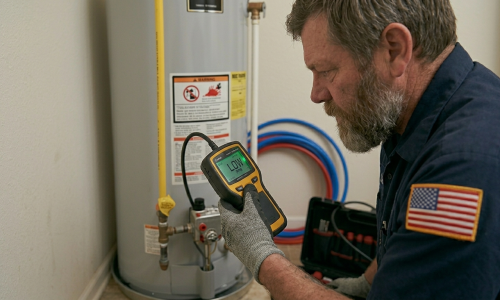
When there’s an active gas leak, everything else stops. We respond to gas leak emergencies throughout the OKC metro area as a priority call. Using electronic gas detection equipment that identifies the presence of natural gas at concentrations far below what the human nose can detect, we locate the precise source of the leak — whether it’s at a fitting, along a pipe run, at an appliance connection, or underground. We make the repair using code-approved materials and methods, pressure test the repaired system to verify integrity, and coordinate with Oklahoma Natural Gas for service restoration. We don’t consider the job done until the system has been tested and you’ve been cleared back into your home.
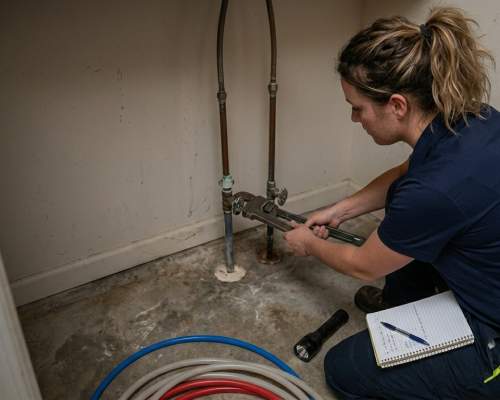
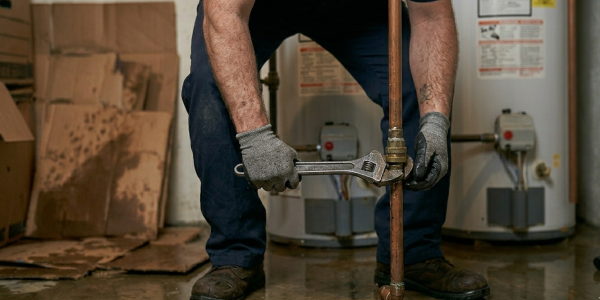
Gas Line Repair Oklahoma City
Not every gas line problem is an emergency, but every gas line problem deserves prompt attention. Common repairs we handle include corroded or leaking threaded fittings, failing flexible appliance connectors, damaged shutoff valves at individual appliances, and repairs to underground supply lines damaged by soil movement or excavation. Every repair is pressure tested after completion — we don’t assume the work is correct, we verify it.
Gas Line Installation Oklahoma City
Adding a new gas appliance to your home — a gas range, a tankless water heater, a gas dryer, a whole-house generator, or an outdoor kitchen setup — requires a properly sized and code-compliant new gas line run from your existing system to the appliance location. Sizing matters significantly. A gas line that’s too small for the BTU demand of the appliance it’s feeding will result in insufficient pressure, poor appliance performance, and the type of frustrating service problems that are difficult to diagnose without understanding the underlying cause. We size new installations to the actual BTU load of the appliances being served, accounting for the total demand on the system including all currently connected appliances.
New gas line installation we commonly handle:
- Gas ranges and cooktops (including switching from electric to gas)
- Gas water heaters and tankless water heater installations
- Gas furnace and heating system connections
- Gas fireplace inserts and log lighter installations
- Whole-house standby generator gas connections
- Outdoor gas lines for grills, outdoor kitchens, fire pits, patio heaters, and pool heaters
- Gas dryer connections and laundry room conversions
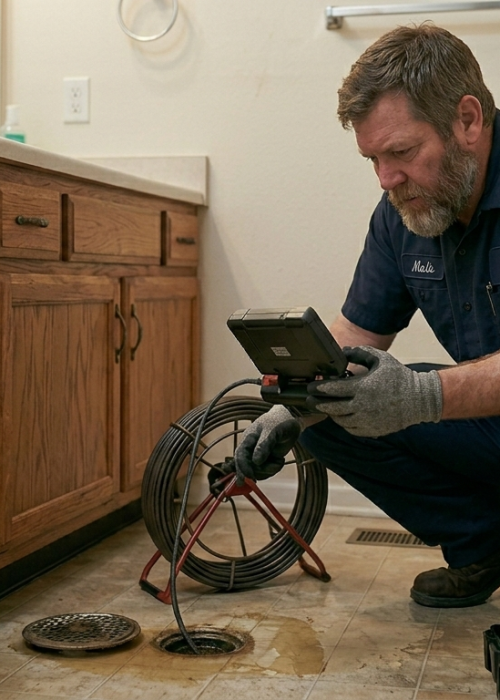
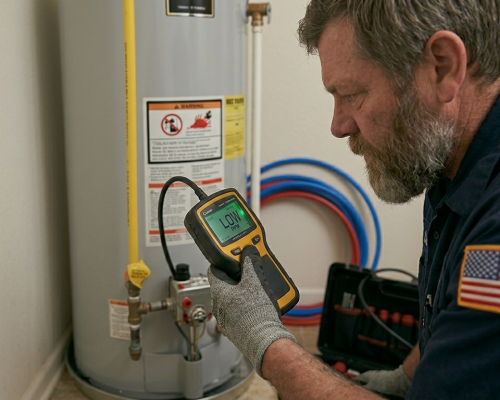
Gas Line Replacement Oklahoma City
When a gas line system is old enough that repair is no longer a reliable long-term solution — typically original pipe in homes over 40 years old showing widespread corrosion or repeated failure points — full line replacement is the appropriate path. We replace aging black iron systems with modern materials appropriate to the application: black iron pipe for interior installations, CSST (corrugated stainless steel tubing) for creative routing through walls, ceilings, and tight spaces, and HDPE (high-density polyethylene) pipe for underground runs where corrosion resistance is the primary concern. Every replacement project is permitted, inspected, and pressure tested to current Oklahoma City and Oklahoma Natural Gas standards.
Gas Line Inspection
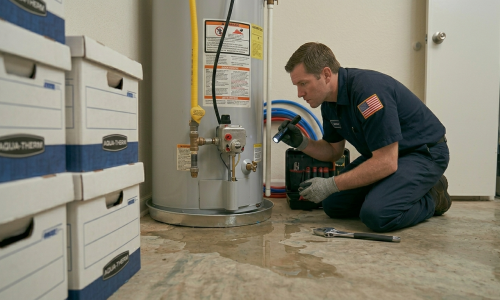
If you’re purchasing an older OKC home, haven’t had your gas system inspected in more than 10 years, or have noticed any of the warning signs listed above — even without an active emergency — a gas line inspection is one of the most valuable preventive investments you can make. A standard home inspection does not include gas line integrity testing. We perform pressure testing and a full visual inspection of accessible gas piping, fittings, valves, appliance connections, and the meter set — and we give you an honest report of the system’s condition and any areas of concern.
Permits and Code Compliance
All gas line work in Oklahoma City requires permits and must comply with Oklahoma City building codes and Oklahoma Natural Gas standards. Any installation, replacement, or significant repair that isn’t permitted and inspected is a liability for the homeowner it can create issues with homeowner’s insurance claims, complicate home sales, and leave you with no documentation that the work was done correctly. We handle the full permitting process on your behalf, from application through final inspection sign-off. You don’t have to navigate the permit system we do it for you as part of every job.
Gas Line Materials
What We Use and Why It Matters
Not all gas pipe materials are appropriate for every application, and choosing the wrong material for the conditions creates future problems. Here’s a plain-language breakdown of what we use and when:
Black Iron Pipe
The traditional material for interior gas line runs. Durable, strong, and widely available. Threaded joints require careful installation and are the most common point of failure in aging systems. Still the standard for many interior applications and the right choice in straightforward installations.
CSST (Corrugated Stainless Steel Tubing)
A flexible stainless steel tubing product that routes easily through walls, ceilings, and tight spaces without the rigid connections required by black iron. Faster to install in complex routing situations and widely used in modern residential construction. Requires proper bonding and grounding per current code requirements, particularly in lightning-prone areas — which Oklahoma City, sitting in the heart of Tornado Alley, very much is.
HDPE (High-Density Polyethylene)
The preferred material for underground gas line runs from the meter to the structure and for outdoor lines buried below grade. Highly resistant to corrosion, flexible enough to handle soil movement without cracking, and rated for the pressures used in residential gas distribution. The right choice for any underground installation in OKC’s shifting clay soil environment.
Flexible Appliance Connectors
The short flexible lines connecting individual appliances to the gas supply valve. These have a finite lifespan and should be inspected periodically. Older uncoated brass connectors that were common in homes built before the 1990s should be replaced — they corrode more readily than modern stainless-braided connectors.
Commercial Gas Line Services in Oklahoma City
Commercial gas systems restaurants, industrial kitchens, manufacturing facilities, apartment complexes, office buildings with gas heating — operate at higher pressures and higher BTU demands than residential systems. They also carry stricter regulatory requirements, more frequent inspection obligations, and higher consequences when something goes wrong. We design, install, repair, and inspect commercial gas piping systems throughout Oklahoma City, sized to the actual load of your equipment and compliant with both OKC building codes and Oklahoma Natural Gas commercial service standards.
Areas We Serve
We provide gas line repair in Oklahoma City OK and throughout the surrounding communities including
Emergency gas line service is available throughout the metro area.
Gas Line Repair Oklahoma City
What should I do immediately if I smell gas inside my home?
Do not touch any electrical switches, light switches, thermostats, or appliances — even turning a light off can create a spark in certain conditions. Do not use your phone inside the home. Leave immediately, leaving the door open behind you to allow ventilation. Once you’re outside and a safe distance from the home, call 911 and Oklahoma Natural Gas at 1-800-458-4251. Then call a licensed gas line plumber to locate and repair the source once emergency responders have assessed the situation. Do not re-enter the home until you’ve been cleared by both emergency services and your plumber.
Can I legally repair a gas line myself in Oklahoma City?
No. Gas line work in Oklahoma — including repairs, new installations, and appliance connections beyond simply plugging in an appliance with a pre-approved flexible connector — requires a licensed plumber or gas fitter. Work performed without a permit is not only illegal but creates liability exposure for the homeowner, can void homeowner’s insurance coverage for related claims, and may become a disclosure issue if you sell the home. The cost of hiring a licensed professional is always less than the cost of the problems unlicensed work creates.
How do I know if my gas line needs to be replaced rather than repaired?
Age and the extent of deterioration are the primary factors. A single leaking fitting on an otherwise sound system is a repair. A system that’s 40 to 60 years old with widespread corrosion, multiple failure points, or pipe material that no longer meets current code — such as older uncoated corrugated connectors or severely corroded black iron — is a replacement candidate. We assess the full system during every service call and give you an honest recommendation backed by what we actually find, not a sales pitch for the most expensive option.
Do you handle the permits for gas line work?
Yes, always. Every gas line installation, replacement, or significant repair in Oklahoma City requires a permit from the city and must pass inspection before the system can be put back into service. We handle the permit application, schedule the inspection, and manage the entire compliance process on your behalf. You won’t have to deal with the permit office or worry about whether the work meets code — that’s our responsibility on every job.
How much does gas line repair or installation cost in Oklahoma City?
Repair costs depend on what’s failed and where. A single leaking fitting or a damaged flexible appliance connector is a relatively straightforward and affordable repair. A damaged underground supply line or a corroded section requiring pipe replacement involves more labor and material cost. New gas line installation is typically priced by the linear foot of pipe run required plus fittings, valves, and any permit fees — the total varies significantly based on the length of the run, the pipe material, and whether the line is interior, underground, or involves penetrating walls and floors. We provide a detailed, written estimate before any work begins. Gas line work is not an area where you should be making decisions based on a verbal ballpark — get the price in writing, with the scope of work clearly defined.
Need gas line repair, installation, or inspection in Oklahoma City? Our licensed plumbers serve the entire OKC metro area with same-day and emergency service availability. Call us today for an upfront estimate and for active gas leaks, don’t call at all. Get out first, then call from outside.