Leak Detection Oklahoma City, OK - Find & Fix Hidden Leaks Before They Destroy Your Home
If you suspect a hidden water leak in your Oklahoma City home, our licensed plumbers use non-invasive acoustic sensors, thermal imaging cameras, and pressure testing to pinpoint the exact location without tearing up your floors, walls, or yard until we know precisely where to look.
Most water leaks don’t announce themselves with a burst pipe and a flood. They start quietly a slow drip inside a wall cavity, a hairline crack in a pipe beneath your concrete slab, a pinhole in an underground supply line. By the time visible symptoms appear, the damage has often been building for weeks or months. In Oklahoma City, where expansive red clay soil shifts constantly with seasonal wet and dry cycles, hidden pipe leaks are not just common they’re one of the most underdiagnosed and costliest plumbing problems homeowners face.
Our leak detection in Oklahoma City OK service is built around finding leaks precisely and quickly, with the least possible disruption to your home so we’re cutting in exactly the right place, not guessing.
Why Hidden Leaks Are Such a Serious Problem in Oklahoma City
Understanding what makes OKC uniquely prone to hidden leaks helps explain why professional detection matters so much here and why DIY guesswork almost always costs more in the long run.
Oklahoma's Expansive Red Clay Soil
The ground beneath most Oklahoma City homes contains significant concentrations of red clay one of the most expansive soil types found anywhere in the country. This clay swells considerably when it absorbs moisture and shrinks and cracks when it dries out. That constant movement puts relentless pressure on underground pipes, slab-embedded supply lines, and the joints connecting them. Over years of seasonal wet and dry cycles, even well-installed pipes can crack, separate at joints, or develop pinhole corrosion from the mechanical stress of the soil shifting around them.
This is why Oklahoma City homes especially those on concrete slab foundations, which is the dominant foundation type in the OKC metro area experience slab leaks at a higher rate than homeowners in more geologically stable parts of the country.
Aging Pipe Materials in Older Neighborhoods
Many homes built in established OKC neighborhoods like Heritage Hills, Mesta Park, Capitol Hill, and Gatewood still have original copper or galvanized steel supply lines that are now 40 to 60 years old. Galvanized pipe corrodes from the inside out over time, progressively narrowing and eventually failing. Copper, while durable, develops pinhole leaks when exposed to aggressive soil conditions or hard water mineral corrosion over decades of use. These failures are often slow, invisible, and devastating by the time they’re discovered.
Oklahoma's Freeze-Thaw Cycles
OKC winters are unpredictable. The city regularly sees rapid temperature swings — from mild to below freezing within hours — that catch homeowners off guard. Water expands when it freezes, and pipes that aren’t properly insulated, or that run through unprotected exterior walls or crawl spaces, can develop cracks during a hard freeze that then leak slowly for months before anyone realizes what happened.
Hard Water Corrosion
Oklahoma City’s water supply carries high mineral content calcium and magnesium from the limestone geology the water passes through before reaching your tap. Over time, these minerals deposit inside pipes and, in combination with the slight acidity of municipal water, accelerate corrosion of copper supply lines. The result is pinhole leaks that are almost impossible to detect without professional equipment.
Warning Signs You Have a Signs You Have Hidden Water Leak
Because most serious leaks are concealed inside walls, under slabs, or underground, homeowners often don’t recognize what they’re seeing until significant damage has already occurred. Here are the signals that should prompt you to call for professional leak detection:
Unexplained Spike in Your Water Bill
Your water usage doesn't change month to month your household habits stay roughly consistent. If your water bill jumps significantly without any obvious explanation (no new appliances, no filling a pool, no change in routine), water is going somewhere it shouldn't be. Even a slow, steady leak of a fraction of a gallon per minute can add hundreds of gallons to your monthly usage.
Sound of Running Water When Nothing Is On
If you can hear water moving through your pipes — a faint hissing, trickling, or flowing sound — when every faucet, toilet, and appliance in the house is turned off, that sound is escaping water. This is one of the clearest indicators of an active leak somewhere in the system.
Hot Spots or Damp Areas on Your Floor
Mold requires sustained moisture to grow. If you're noticing mold patches on walls, ceilings, or baseboards — or a persistent musty smell in areas that shouldn't be damp — there's a moisture source feeding it. A leaking pipe inside a wall cavity provides exactly the dark, continuously wet environment mold thrives in.
Soggy Patches or Unusually Green Grass in the Yard
A cracked or leaking sewer line essentially fertilizes the soil around it. If you notice one section of your yard staying wet when others are dry, or a patch of grass that's noticeably greener and lusher than everything around it, there may be a sewer line leak directly below it.
Visible Cracks in Walls, Floors, or Foundation
A leaking pipe beneath your slab gradually erodes the soil supporting the concrete. As the ground becomes saturated and unstable, the foundation shifts unevenly — and that movement cracks walls and floors. New cracks appearing in drywall, especially near the floor line, or in tile floors that weren't there before, can indicate foundation movement driven by an active slab leak beneath.
Consistently Low Water Pressure
If your water pressure has dropped noticeably at one or more fixtures without any other explanation, water may be escaping the supply line before it reaches the fixture. Pressure loss that's isolated to certain areas of the house is particularly telling.
Water Meter Moving With Everything Off
Here's a simple test: turn off every water-using fixture and appliance in your home, then check your water meter. If the dial or digital display is still moving, water is actively flowing somewhere in your system. This confirms a leak is present — and professional detection will find where.
Our Leak Detection Process in Oklahoma City
We don’t pick up a jackhammer and start cutting into your floor because your water bill went up. Every leak detection call follows a careful, systematic process designed to find the problem precisely before any physical access work begins.
01
Whole-System Pressure Testing
We isolate different sections of your plumbing system and test each for pressure loss. Where pressure drops when a section is isolated, the leak is confirmed within that section. This narrows the search area significantly before we deploy specialized equipment.
02
Acoustic Listening Device Survey
Our electronic acoustic sensors are sensitive enough to hear the sound signature of escaping water through concrete slabs, behind drywall, and underground. The sound of water under pressure leaking through a crack in a pipe is distinct — and our equipment can triangulate the source location with remarkable precision. This step often pinpoints the leak to within inches without opening anything.
03
Thermal Imaging Camera Inspection
Thermal imaging cameras detect temperature differences on surfaces that are invisible to the naked eye. A leaking hot water line beneath a slab produces a warm zone on the floor above it. A leaking cold supply line running through a wall creates a cooler, often damp area in the drywall. Our cameras map these temperature variations and confirm what the acoustic equipment identified.
04
Tracer Gas Testing (When Needed)
For particularly challenging leaks in deeply buried lines or in situations where acoustic and thermal methods can’t definitively pinpoint the source, we use tracer gas testing. A safe, non-toxic gas mixture is introduced into the pipe under pressure. The gas escapes at the leak point and rises to the surface, where our detector finds it — identifying the leak location even under several feet of concrete or soil.
Types of Leaks We Detect and Repair in Oklahoma City
Slab Leaks
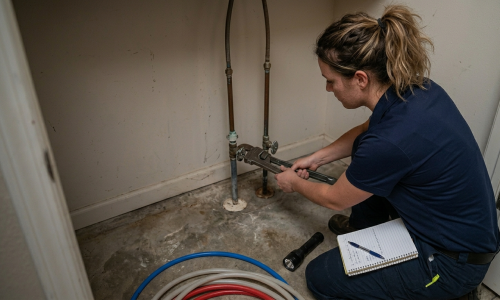
A slab leak is a water leak in a pipe that runs through or beneath your home’s concrete foundation. Given OKC’s clay soil conditions, this is the most common and most serious type of hidden leak we encounter. Left unaddressed, slab leaks erode soil beneath the foundation, destabilize the concrete, damage flooring and subflooring from below, and create chronic moisture conditions that promote mold growth throughout the lower levels of the home. We detect slab leaks without guesswork and offer multiple repair approaches — direct repair at the leak point, pipe rerouting through walls or attic space to bypass the affected section entirely, or epoxy pipe lining as a minimally invasive alternative to breaking concrete in cases where the pipe is accessible.

In-Wall and Ceiling Leaks
Supply line failures inside wall cavities and drain line leaks at connection points above ceilings are among the most difficult leaks to locate without specialized equipment. What looks like a water stain on the ceiling directly below a bathroom may actually originate from a leak point several feet away — water travels along pipes and framing members before dripping. Our acoustic and thermal equipment traces the source, not just the symptom.
Underground Supply Line Leaks
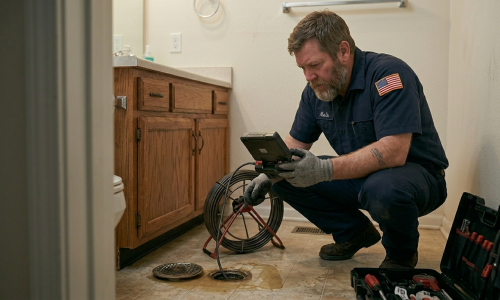
The main supply line running from the city water meter to your home is underground, typically buried 18 to 24 inches below your yard. When this line develops a leak — from soil movement, pipe age, or corrosion — it loses water continuously between the meter and the house. Your meter registers the usage, your bill increases, but nothing inside the house shows any sign of a problem. We locate underground supply line leaks without excavating your entire yard, then dig a single targeted trench for the repair.
Gas Line Leak Detection
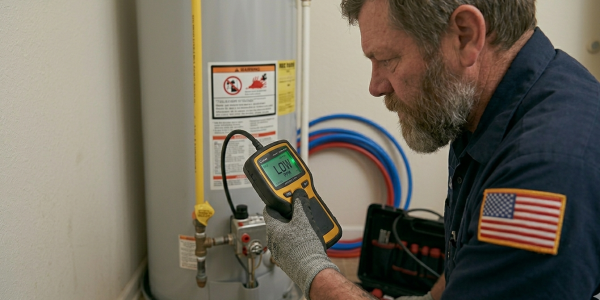
A gas leak is an immediate safety emergency. If you smell natural gas — that distinctive rotten egg odor — leave the home immediately and call your gas provider from outside. For suspected slow gas leaks that aren’t immediately obvious, our licensed technicians use electronic gas detection equipment to locate the source safely. Gas line integrity and safety is not something to investigate with DIY methods.
Commercial Leak Detection Oklahoma City
Water leaks in commercial buildings — office complexes, restaurants, retail spaces, apartment buildings — carry operational and liability consequences beyond the physical damage. We serve commercial property managers and business owners throughout OKC with the same precision leak detection methodology, scaled to larger and more complex plumbing systems.
Why Guessing Costs More Than Professional Detection
We understand the temptation to handle a suspected leak yourself or to call a plumber who charges less by skipping the diagnostic equipment. But when it comes to hidden leaks, guesswork is expensive. Here’s why:
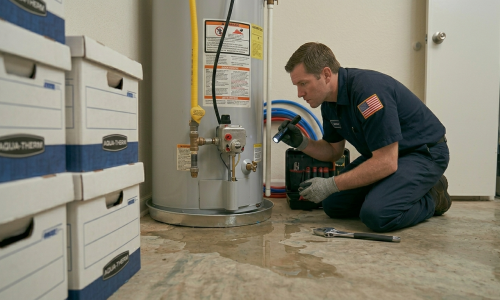
Opening walls and floors without confirmed leak location means unnecessary demolition and the cost of restoring drywall, tile, flooring, and paint on top of the plumbing repair itself. A plumber who “thinks” the leak is in a certain area and opens up three different sections of your floor before finding it has cost you far more in restoration work than professional detection would have. Our diagnostic process typically costs a fraction of what one unnecessary tile replacement job runs, let alone multiple failed excavation attempts.
Beyond the repair cost, every day a hidden leak continues is more water damage accumulating inside your walls or beneath your foundation. The longer a slab leak runs undetected, the more it undermines the structural integrity of the concrete and the soil beneath it. What costs a few thousand dollars to fix today can cost tens of thousands if it compromises the foundation.
Service Area Leak Detection Across the
We provide leak detection in Oklahoma City OK and throughout the surrounding communities including
Same-day and emergency service is available throughout the metro area for active leaks and urgent situations.
Suspect a hidden leak in your Oklahoma City home? Call our team today to schedule a non-invasive leak detection inspection. We serve the entire OKC metro area with same-day availability for urgent situations and transparent pricing from start to finish.
Leak Detection Oklahoma City
How do I know if I have a slab leak specifically?
The most reliable indicators of a slab leak — as opposed to a wall or underground leak — are warm or damp spots on your floor that don’t move or change, the sound of water running that seems to come from beneath the floor rather than from pipes in the walls, water bill increases without any change in usage, and new cracks forming in floor tile, hardwood, or your foundation walls. The definitive answer comes from professional pressure testing and acoustic detection. If you’re seeing two or more of these signs simultaneously, call for an inspection — don’t wait for the symptoms to become obvious damage.
Can you detect a leak without breaking through my floor or walls?
In the vast majority of cases, yes. Our acoustic listening devices, thermal imaging cameras, and pressure testing equipment are specifically designed to locate leaks non-invasively. We find the source before any physical access work begins, which means when we do need to open a surface, we cut once — in exactly the right location — rather than opening multiple sections hoping to find the problem. The goal is always the smallest possible footprint of disruption.
How much does leak detection cost in Oklahoma City?
Professional leak detection in OKC typically ranges from $150 to $400 depending on the complexity of the system, the type of leak suspected, and how many detection methods are required. That diagnostic cost is almost always recovered many times over by avoiding unnecessary demolition work, catching the leak before it causes structural damage, and ensuring the repair is done at the correct location the first time. We provide a clear estimate before the diagnostic begins so there are no surprises.
Does homeowner's insurance cover slab leaks or hidden water leaks?
Many standard homeowner’s insurance policies in Oklahoma cover sudden and accidental water damage from a pipe leak — but coverage varies significantly based on your policy language, your insurer, and the nature and cause of the leak. Gradual leaks that weren’t reported promptly are often excluded. Structural repairs to the foundation itself are also commonly excluded from standard policies. We can provide detailed documentation of the leak, its location, its cause, and the repair method — which is what your insurance adjuster will need to process a claim. We recommend contacting your insurer to understand your specific coverage before assuming what will or won’t be covered.
How quickly can a hidden water leak cause serious damage?
Faster than most people expect. A slab leak releasing even a small amount of water continuously can begin undermining soil stability within days and create conditions for mold growth within 24 to 48 hours of sustained moisture exposure. A wall leak that goes undetected for a month can saturate insulation, rot framing, and create significant mold colonies inside the wall cavity — all entirely hidden from view. The sooner a hidden leak is detected and repaired, the narrower the scope of damage and the lower the total cost. If you have any reason to suspect a leak, err on the side of calling sooner rather than later.