Sewer Line Repair Oklahoma City, OK
Licensed Plumbers, Same-Day Diagnostics
If your sewer line is backing up, gurgling, or showing signs of damage, our licensed Oklahoma City plumbers provide same-day sewer camera inspection, expert repair, and full sewer replacement — with honest assessments and upfront pricing every time.
A sewer line problem is not a “wait and see” situation. When wastewater can’t move freely through your main line, everything connected to it every toilet, sink, shower, and drain in your home backs up. And in Oklahoma City, where clay-heavy soil, shifting ground conditions, and aging pipe infrastructure create uniquely challenging conditions underground, small sewer problems can escalate into serious structural failures faster than most homeowners expect.
Our team handles sewer line repair in Oklahoma City OK for residential and commercial properties throughout the metro area from a targeted spot repair on a cracked section to full sewer replacement in Oklahoma City OK when the damage is beyond saving.
Why Oklahoma City Sewer Lines Fail Faster Than You'd Expect
Most homeowners assume their underground sewer pipe just quietly does its job indefinitely.
The reality in OKC is quite different and understanding why helps explain why sewer problems are so common here.
Clay Soil and Ground Movement
Oklahoma City sits on expansive clay-heavy soil that swells significantly when wet and contracts when it dries out. That constant movement puts enormous stress on underground pipes, especially at joints and connections. Over time, that stress causes pipes to shift, belly (sag in the middle creating a low spot where solids collect), crack, or separate at the joints entirely.
Nearly Half the City's Pipe is Clay Tile
According to the City of Oklahoma City’s own sewer maintenance data, close to 50 percent of OKC’s sewer pipe infrastructure is made of clay tile — a material that is highly brittle and extremely susceptible to cracking under soil movement pressure. Once a crack forms in clay pipe, it acts as an open invitation for tree roots searching for moisture.
Tree Root Intrusion is OKC's Biggest Sewer Problem
In most cities across the country, grease buildup is the primary cause of sewer backups. In Oklahoma City, it’s the opposite root intrusion accounts for more than 40 percent of all sewer issues in the city’s collection system. The mature oak, elm, and pecan trees that give established OKC neighborhoods like Nichols Hills, Crown Heights, and Putnam City their character also send aggressive root systems searching underground for water. When those roots find even the tiniest crack in a sewer pipe, they grow inside it, expand, and eventually cause complete blockages or structural collapse.
Orangeburg and Cast Iron Pipes in Older Homes
Homes built before the 1970s in neighborhoods like Mesta Park, Heritage Hills, and Capitol Hill often have original Orangeburg pipe — a compressed tar and paper material that was never intended to last more than 50 years and has now long exceeded that timeline. Cast iron, another common material in older OKC homes, corrodes from the inside out over decades of use. Both materials are overdue for replacement in much of the city’s older housing stock.
Understanding these local factors is why a thorough sewer camera inspection in Oklahoma City is always our first step because the right repair method depends entirely on what’s actually happening inside the pipe, not just what symptoms appear at the surface.
Warning Signs Your Sewer Line Needs Professional Attention
Sewer line problems rarely announce themselves all at once. They typically build over months or years, showing subtle signs that most homeowners mistake for isolated plumbing issues. Here’s what to watch for:
Multiple Drains Backing Up Simultaneously
When a single drain clogs, it's usually a localized blockage. When two or more drains back up at the same time or when flushing the toilet causes water to bubble up in the bathtub the problem is almost certainly in the main sewer line, not in individual branch lines.
Sewage Odor Inside or Outside the House
A functioning sewer line is a sealed system. If you're smelling raw sewage inside your home or noticing a persistent odor in the yard, it typically means the pipe has cracked or separated and is releasing gases and wastewater into the surrounding soil.
Slow Drains Throughout the House
A single slow drain is usually a local clog. Slow drains at multiple fixtures throughout the home especially when they don't respond to snaking or drain cleaning points to a partial main sewer line obstruction.
Mold, Mildew, or Musty Odors
A cracked or leaking sewer line essentially fertilizes the soil around it. If you notice one section of your yard staying wet when others are dry, or a patch of grass that's noticeably greener and lusher than everything around it, there may be a sewer line leak directly below it.
Recurring Backups Despite Repeated Cleaning
If you've had your main line snaked multiple times and the clog keeps returning within weeks, you're not dealing with a simple blockage. You're dealing with a structural problem root intrusion, a pipe belly, or a collapse that snaking can temporarily clear but never actually fix.
Foundation Cracks or Sinkholes Near the Home
A severely leaking sewer line can erode the soil around and beneath your foundation. If you're seeing new cracks in your foundation or small sinkholes forming in the yard, a sewer line failure may be the underlying cause. This is a situation that warrants immediate professional attention.
Sewer Camera Inspection Oklahoma City See Exactly What's Wrong Before Any Work Begins
One of the biggest mistakes homeowners make is authorizing repair work without actually knowing what’s inside their pipe. Guesswork leads to unnecessary digging, wrong repair methods, and problems that come back. We never operate that way.
You see everything we see, in real time. We document the footage so you have a record of the condition, and we use it to give you an accurate repair recommendation and a firm price before anything else happens. No speculation, no unnecessary digging based on assumptions.
Camera inspection also serves a critical purpose for homebuyers. If you’re purchasing an older home in OKC particularly anything built before 1980 a sewer scope inspection before closing can reveal problems that a standard home inspection will never catch. A deteriorated sewer line is one of the most expensive surprises a new homeowner can face, and it’s entirely preventable with a camera inspection.
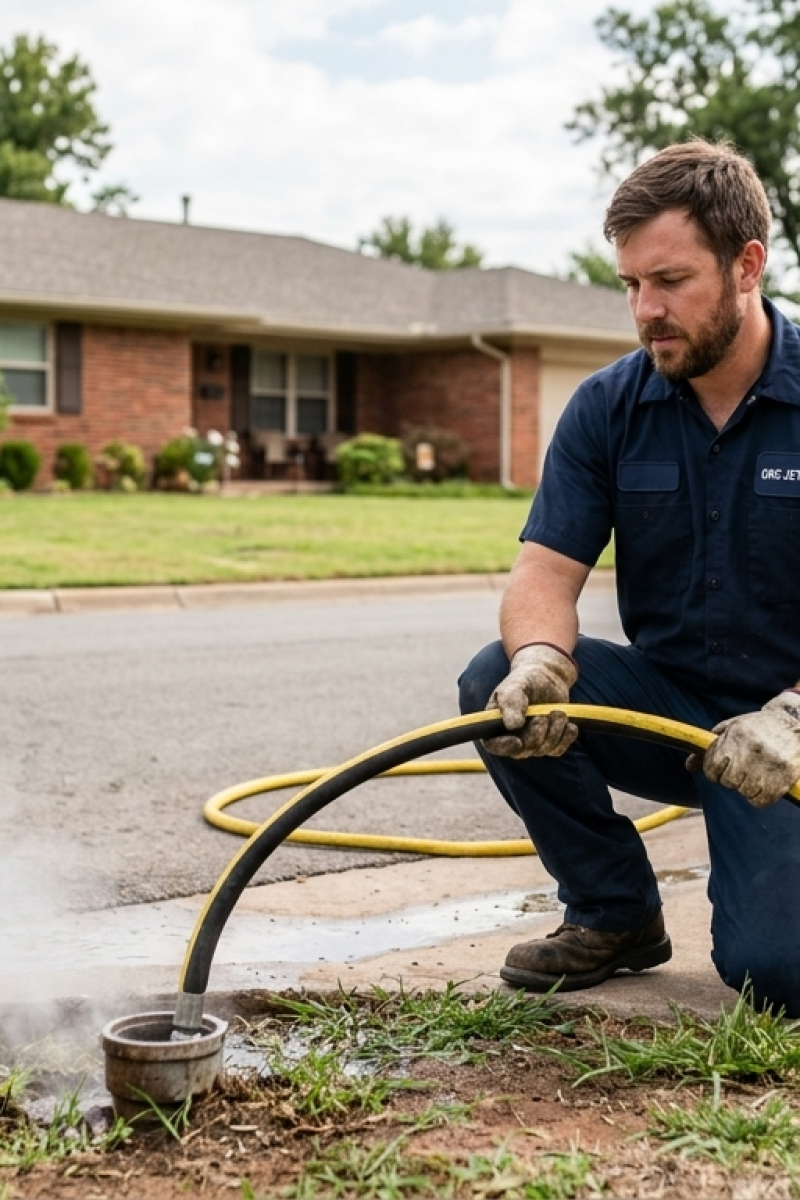
Every sewer diagnostic we perform starts with a sewer camera inspection in Oklahoma City. We run a flexible, waterproof camera through your sewer line and transmit live, high-definition footage directly from inside the pipe. This shows us:
- The exact location and nature of any blockage or damage
- Whether tree roots are present and how far they’ve penetrated
- The condition of pipe joints and connections
- Any sections that are cracked, collapsed, or have developed a belly
- The pipe material (critical for choosing the right repair method)
- Whether the damage is isolated to one section or widespread throughout the line
Our Sewer Line Repair Services in Oklahoma City
Once we know exactly what we’re dealing with from the camera inspection, we select the most appropriate repair method for your specific situation. We don’t have a one-size-fits-all approach the right solution depends on the pipe material, the extent and nature of the damage, the depth of the line, and what’s above it.
Spot Repair
When the damage is limited to one clearly defined section of pipe — a single crack, a separated joint, or a localized root intrusion point — we can excavate just that section, replace the damaged segment, and backfill. This is faster and significantly less expensive than a full line replacement when the rest of the pipe is in solid condition.
Trenchless Sewer Repair Oklahoma City — Pipe Lining (CIPP)
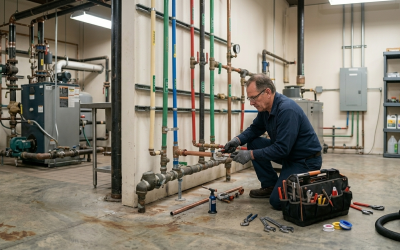
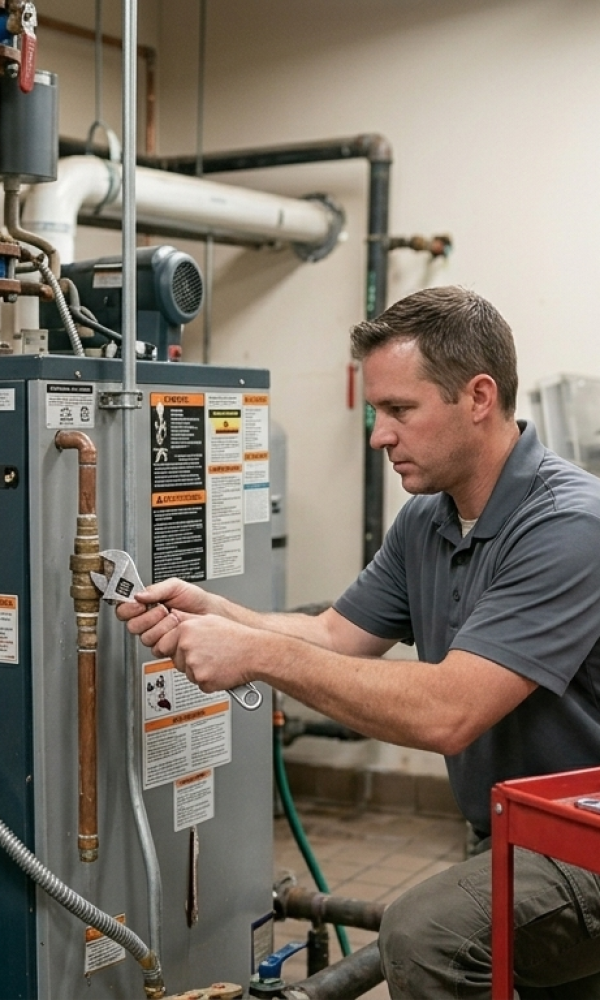
Cured-In-Place Pipe lining, commonly called CIPP, is one of the most advanced and least disruptive trenchless sewer repair methods available in Oklahoma City. Here’s how it works: we insert a flexible liner saturated with an epoxy resin into the existing damaged pipe, inflate it against the pipe walls, and cure it in place — creating a brand new, seamless pipe inside the old one.
The result is a fully structural, corrosion-resistant pipe that bonds to the interior of the old pipe and effectively seals all cracks, minor separations, and root intrusion points. No excavation. No torn-up yard, driveway, or landscaping. The liner is rated to last 50 years or more and is an excellent choice when the host pipe still has enough structural integrity to support it.
CIPP lining is particularly effective for:
- Clay and cast iron pipes with cracks and joint separations
- Lines with minor to moderate root intrusion where roots haven’t caused full structural collapse
- Pipes that run under driveways, patios, landscaping, or finished areas where excavation would be extremely disruptive or costly
- Situations where the homeowner wants a long-term, permanent solution rather than repeated temporary fixes
Trenchless Sewer Repair Oklahoma City Pipe Bursting
When a pipe is too deteriorated or structurally compromised to support lining, pipe bursting is often the trenchless alternative to full excavation. A bursting head is pulled through the existing pipe, fracturing it outward into the surrounding soil while simultaneously pulling a new HDPE (high-density polyethylene) pipe into position behind it.
The old pipe is destroyed and replaced in a single pass with only small access pits at each end rather than a trench the full length of the line. Pipe bursting is an excellent choice for Orangeburg pipe, severely deteriorated clay pipe, and lines with widespread damage that CIPP lining can’t adequately address.
Full Sewer Replacement Oklahoma City OK
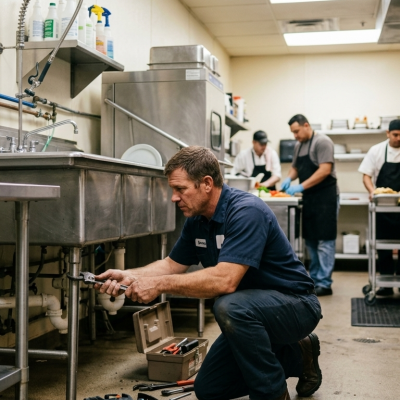
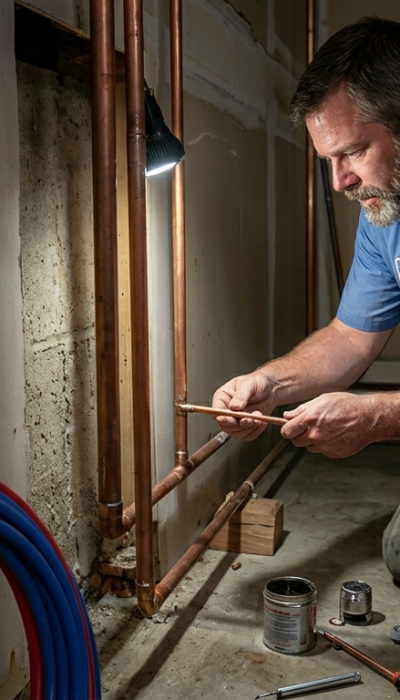
When a sewer line is extensively collapsed, has multiple severe damage points spread across its full length, or is made of a material that can no longer support any trenchless method, traditional open-cut sewer replacement in Oklahoma City OK is the right answer. We excavate the full line, remove the old pipe, install new PVC sewer pipe to current code, backfill, and restore the surface.
While more disruptive than trenchless methods, full replacement is sometimes simply the most practical and most cost-effective long-term solution — particularly for lines that have been temporarily patched multiple times and are approaching end of life.
We always walk you through the comparison between trenchless and traditional replacement — including real cost differences and realistic longevity expectations — so you can make the decision that’s right for your property and your budget.
Sewer Replacement Oklahoma City OK When Repair Isn't Enough
Not every sewer problem can or should be repaired. Here’s our honest framework for when replacement makes more sense than repair:
- The line is Orangeburg pipe this material is past its functional lifespan and cannot be reliably relined or repaired long-term
- The pipe has collapsed across multiple sections widespread structural failure means there’s no longer a reliable host pipe to work with
- Root intrusion has recurred repeatedly despite treatment, indicating chronic entry points that repair has not resolved
- The pipe belly is severe a significant sag creates a permanent low point where solids collect, and lining over a belly doesn’t fix the drainage problem
- The damage extends the full length of the lateral at that point, full replacement is often more cost-effective than multiple spot repairs or an extensive lining job
We won’t push you toward replacement if a repair genuinely makes sense. And we won’t recommend a temporary fix just to get you off the phone when your line actually needs to be replaced. Our technicians give you a straight answer backed by camera footage you can see with your own eyes.
Commercial Sewer Line Services in OKC
Sewer line problems in commercial properties carry higher stakes business disruption, health code concerns, and liability exposure. We service restaurants, apartment complexes, office buildings, retail spaces, and industrial facilities throughout Oklahoma City with the same diagnostic precision and urgency we bring to residential calls. Commercial lines often require larger-diameter inspection equipment and repair methods. We’re equipped for all of it.
Areas We Serve
We provide sewer line repair in Oklahoma City OK and throughout the surrounding metro area, including:
Every emergency call includes an honest diagnosis, upfront pricing before any work starts, and a licensed plumber, not an unlicensed technician working under someone else’s credentials.
Sewer Line Repair Oklahoma City
How do I know if I have a sewer line problem or just a regular drain clog?
The clearest indicator is whether the issue affects multiple fixtures at once. A standard drain clog is localized one sink, one toilet, one shower. A sewer line problem affects multiple drains simultaneously, or causes water to back up in unexpected places (like the tub gurgling when you flush the toilet). Foul odors from multiple drains, soggy spots in the yard, or backups that return quickly after cleaning are also strong signs the main line is involved. A sewer camera inspection is the definitive way to know for certain.
What is trenchless sewer repair and is it available in Oklahoma City?
Trenchless sewer repair refers to methods that fix or replace a damaged sewer line without digging a full trench along its length. The two most common methods are pipe lining (CIPP), where a resin-coated liner is cured inside the existing pipe to create a new pipe within the old one, and pipe bursting, where the old pipe is fractured outward while a new pipe is pulled in behind a bursting head. Both methods are available throughout Oklahoma City and are particularly valuable in older OKC neighborhoods where lines often run under mature landscaping, driveways, or established hardscaping.
How much does sewer line repair cost in Oklahoma City?
Cost varies significantly based on what’s wrong, where the damage is, how deep the line is buried, and which repair method is appropriate. A localized spot repair might run a few hundred to a couple thousand dollars. A full trenchless lining of the lateral from the house to the city main can range from $3,000 to $8,000 or more depending on length and conditions. Traditional open-cut full replacement costs vary similarly but can be higher due to excavation and surface restoration. We provide a firm written estimate after camera inspection — before any work begins — so there are no surprises.
How long does a sewer line repair take?
Most spot repairs are completed in a single day. Trenchless pipe lining typically takes one to two days depending on the length of the line and curing time. Pipe bursting is usually completed in a day. Full traditional excavation and replacement on a standard residential lateral generally takes one to three days depending on depth, soil conditions, and length. We’ll give you a realistic timeline before we start.
Should I get a sewer inspection before buying a home in Oklahoma City?
Absolutely — and we’d say this is especially important in OKC. Given the prevalence of clay tile pipe, expansive clay soil, mature trees with aggressive root systems, and a significant amount of housing stock built before 1975, older OKC homes carry a higher-than-average risk of hidden sewer line problems. A standard home inspection does not include a sewer scope. A sewer camera inspection before closing costs a fraction of what a sewer line replacement costs after you’ve already purchased the home. It’s one of the smartest investments you can make in the home-buying process.
Don’t wait for a full backup to find out you have a sewer problem. Call our Oklahoma City team today to schedule a sewer camera inspection or get a same-day diagnostic on an active issue. We serve the entire OKC metro area with upfront pricing and no hidden fees.